

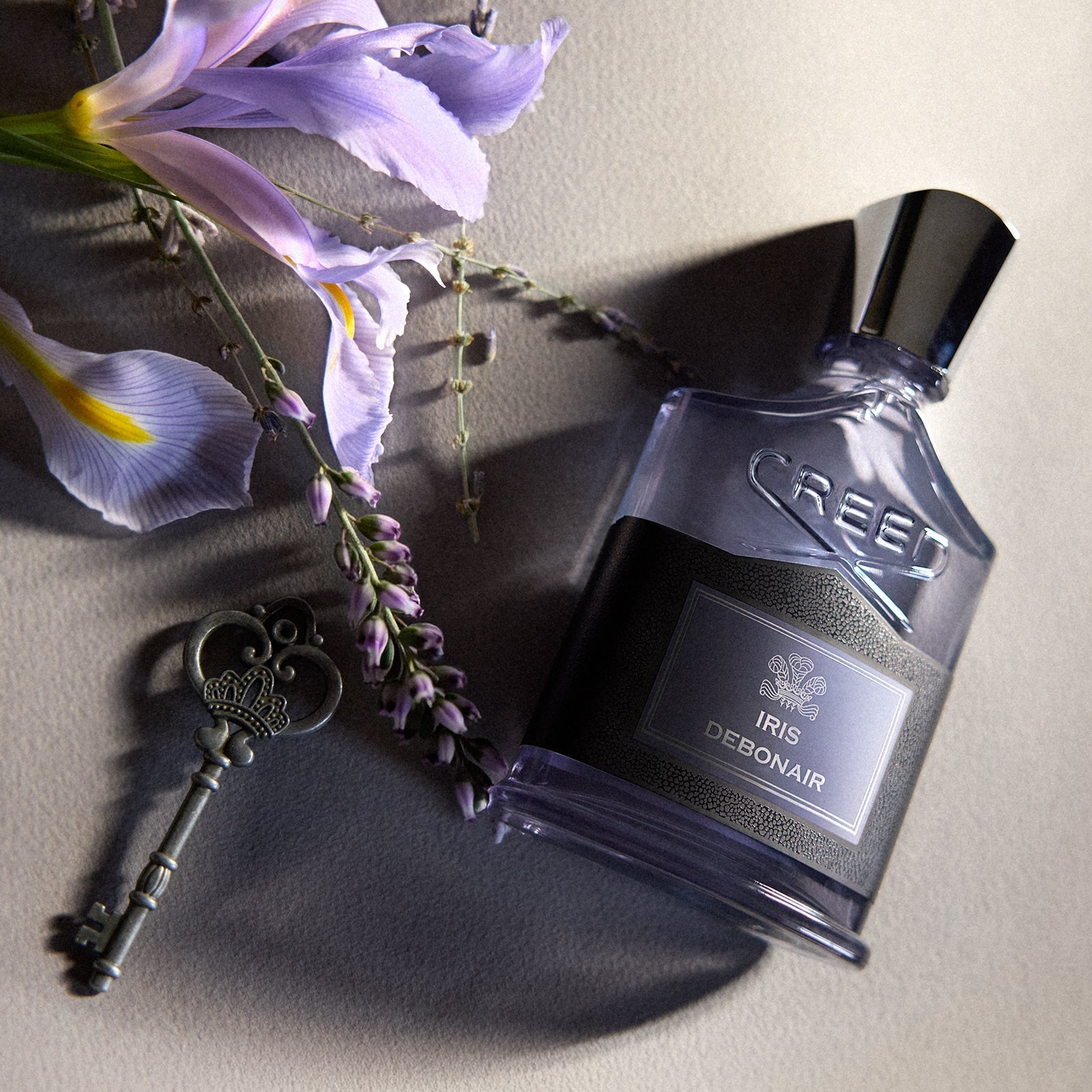
Creed is opening September 2026 with Iris Debonair, a new unisex floral fougère built around the contrast between English lavender and French iris pallida. Inspired by fashion designer Charles Creed, the fragrance translates tailoring into scent: a precise bergamot-and-absinthe opening, a cool aromatic heart softened by fig, and an earthy iris base framed by ambrette and modern amberwood.
The concept is more nuanced than the name alone suggests. This is not presented as a dense lipstick iris or a sweet gourmand. Creed calls it a “contemporary universal cut,” bringing the traditionally masculine structure of a fougère together with the softer language of floral perfumery.
The quick take: Iris Debonair appears to be Creed’s tailored, modern answer to the iris fougère—a polished composition that moves from bright green spice into lavender, violet leaf and fig before settling into velvety iris, musky ambrette and dry amberwood.
Creed Iris Debonair at a glance
| Launch | September 2026 |
|---|---|
| Concentration | Eau de Parfum |
| Fragrance family | Floral fougère |
| Audience | Unisex |
| Key materials | Bergamot and absinthe, English lavender, fig pulp, French iris pallida, ambrette, amberwood |
| Bottle sizes | 50 ml and 100 ml |
| Availability | Creed boutiques from September 1; selected retailers from September 8, with timing varying by market |

Explore Creed Iris Debonair and current offers →
What does “Iris Debonair” mean?
The name looks English, but Creed traces it to the old French expression de bon air: a person of good disposition or lineage. Over time, “debonair” came to suggest effortless charm, composure and quiet confidence—the kind of polish that never has to announce itself.
That idea leads directly to Charles Creed, the fifth-generation family figure who inspired the release. Creed describes him as a visionary fashion designer and aesthete whose work anticipated casual chic. His favored greys and blues shape the bottle, while the fragrance’s disciplined lines reference British tailoring and its iris supplies a softer French counterpoint.
The name therefore does several jobs at once. It evokes family heritage, describes the intended personality of the wearer and bridges the house’s French origins with its British identity.
The official note pyramid
| Stage | Official notes | Scent direction |
|---|---|---|
| Top | Bergamot and absinthe co-infusion, pink pepper, cardamom | Bright citrus, green bitterness and cool spice |
| Heart | English lavender, violet leaf, fig pulp accord | Aromatic, leafy, softly fruity and smooth |
| Base | French iris pallida, ambrette, amberwood | Velvety, earthy, musky and dry-woody |
The official structure is important because early unofficial descriptions have circulated with different notes. Creed’s confirmed pyramid does not list suede, tobacco, sandalwood, rosemary, vetiver or cedar. The composition is centered instead on the dialogue between bergamot and absinthe, lavender and fig, then iris pallida, ambrette and amberwood.
How Iris Debonair may smell
The opening should be crisp rather than conventionally fresh. Calabrian bergamot provides light and recognizable citrus sparkle, while absinthe leaves suggest a drier, more bitter green edge. Pink pepper can add lift without the weight of black pepper, and cardamom brings a cool aromatic warmth. Together, those materials point toward a tailored opening: bright, sharp enough to define the silhouette, but not aggressively sporty.
The heart is where the fougère begins to soften. Lavender supplies the classic aromatic backbone. Violet leaf often reads green, watery and slightly metallic, while a fig pulp accord can add milky fruitiness without pushing the fragrance into dessert territory. This middle stage may be the composition’s most contemporary move, rounding a traditional lavender structure with texture and understated sweetness.
The iris sits in the base rather than dominating from the first spray. French iris pallida is paired with ambrette—a material valued for its soft botanical musk—and amberwood. That suggests a drydown with powder, earth and skin warmth rather than a dense cosmetic effect. Amberwood should give the softer materials reach and structure, keeping the finish from becoming too delicate.
This is a first-look analysis based on Creed’s official materials, not a hands-on performance review. Projection, longevity and the balance between iris and amberwood will need to be judged on skin.
Three ingredients tell the whole story


Creed calls the bergamot-and-absinthe pairing a house-exclusive co-infusion. The idea is to introduce the perfume with both brightness and an intentional green tension, establishing the clean edge that a tailoring-inspired fragrance needs.
The English lavender is grown in the chalky soils of Kent. According to Creed, its cultivator spent twenty years perfecting the plant for the region’s cool climate, producing a smoother and fresher aromatic profile. That specificity is more than a sourcing story: Kentish lavender gives the British side of the fragrance a literal place.
The French iris pallida comes from Les Landes. Creed says the rhizomes are cultivated for more than three years before refinement through a process developed over twelve years. Iris materials come from the plant below ground rather than the showy flower pictured in campaigns, which helps explain the note’s earthy, root-like and buttery facets.
A floral fougère with a “universal cut”
Fougères traditionally organize lavender and aromatic freshness over a deeper base, often with an unmistakably barbershop or masculine association. Creed says Iris Debonair brings that structure together with floral perfumery for the first time in the house’s catalogue. The company’s “universal cut” language is deliberate: this is officially positioned as unisex, not as a men’s release that happens to contain iris.
Iris is a smart material for that bridge because it resists simple gender coding. It can smell cool or warm, rooty or powdery, austere or creamy. Paired with lavender, it reinforces refinement; paired with fig and ambrette, it becomes softer and more tactile; paired with amberwood, it gains a modern woody frame.
Within Creed’s broader range, Iris Debonair appears gentler and more floral than the green-mossy direction of Green Irish Tweed and less overtly spicy than Viking. It also moves away from the fruit-driven woody profile that many shoppers associate with Aventus. The point is not to replace those signatures, but to give the house’s fougère tradition a quieter and more textural expression.
The grey-blue bottle
Iris Debonair uses Creed’s familiar hip-flask-inspired silhouette, but the visual treatment is unusually restrained. Pale grey glass is infused with a cool iris-blue tone, the cap remains metallic, and a dark textured wrap frames a muted blue-grey label.
Creed says the palette references Charles Creed’s favored grey and blue fabrics. It is a successful translation of the fragrance concept before the cap is removed: sober tailoring, a flash of floral color and no unnecessary ornament. The Eau de Parfum is offered in 50 and 100 ml bottles, alongside a limited-edition 5 ml travel atomizer in grey quartz leather in select markets.
Who should sample Iris Debonair?
- Iris lovers interested in a greener, aromatic treatment rather than a lipstick-heavy iris.
- Fougère fans who want lavender softened by fig, violet leaf and botanical musk.
- Creed collectors looking for a profile distinct from Aventus, Green Irish Tweed and Viking.
- Unisex fragrance shoppers drawn to polished scents that balance traditionally masculine and feminine cues.
- Office and smart-casual wearers who prefer composure and texture over overt sweetness.
The note structure suggests particular promise for transitional weather, mild days, professional settings and dressed-up evenings. Iris and lavender can feel elegant in cool air, while the citrus-green opening should keep the scent from becoming overly dense. Still, amberwood can vary dramatically in intensity from one wearer to another, making a skin test especially worthwhile.
Release date, sizes and availability
Iris Debonair launched at Creed standalone boutiques worldwide on September 1, 2026, with selected retailers scheduled to begin receiving it on September 8. Creed lists 50 ml and 100 ml bottles. Prices, stock and exact release timing vary by region.
View Creed Iris Debonair and compare current offers →
Final verdict
Iris Debonair is one of Creed’s more conceptually coherent recent launches. The name, bottle, sourcing story and note structure all point in the same direction: quiet confidence expressed through precise contrasts. Bright bergamot meets bitter absinthe; English lavender meets French iris; the classical fougère meets a softer floral and musky finish.
The open question is how much space the iris and fig retain once the amberwood emerges. If the balance holds, Iris Debonair could offer something genuinely distinctive in the Creed lineup: not a loud statement fragrance, but a tailored signature whose detail becomes clearer the closer you get.
Editorial note: This article is based on official launch materials and reported note information, not a full wear test. Fragrance perception and performance vary with skin, climate and application. Prices and availability can change.
Sources
- Creed — Iris Debonair official product page and note pyramid
- Creed Journal — Introducing Iris Debonair
- Creed — Iris Debonair ingredients and formats