

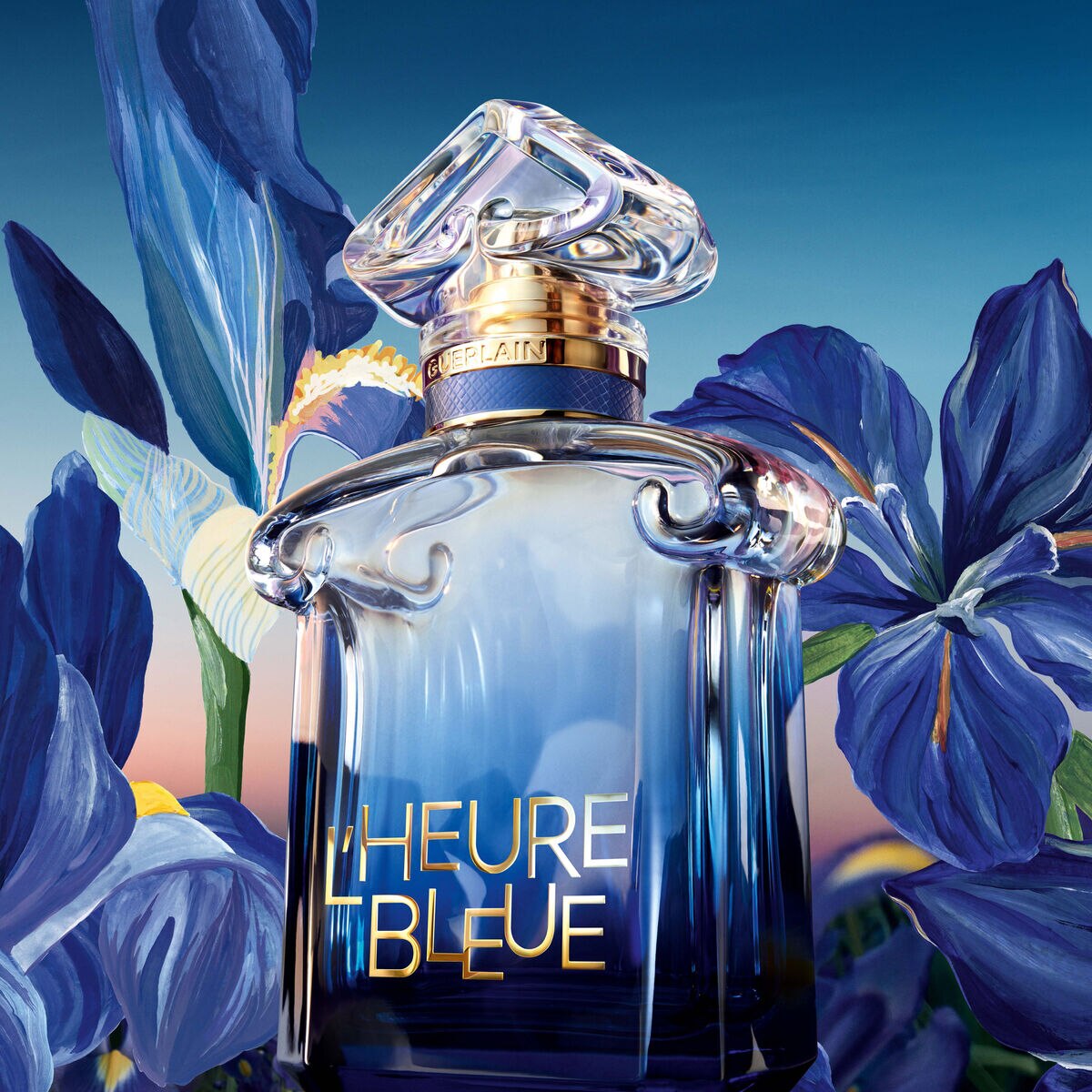
Guerlain has given one of perfumery’s most storied names a new composition for 2026. Created by Delphine Jelk, the new L’Heure Bleue Eau de Parfum is not simply a fresh bottle for Jacques Guerlain’s 1912 classic. It is a contemporary floral amber built around an airy ozonic accord, a tailor-made iris tincture, iris butter, vanilla, Ambroxan, and musks.
That distinction matters. The original has not been erased: Guerlain is distinguishing Jacques Guerlain’s composition as L’Heure Bleue 1912, while the unqualified L’Heure Bleue name now introduces Jelk’s new interpretation. The two are intended to coexist. What connects them is an emotional idea—the suspended blue light between day and night—and a shared iris-and-vanilla signature. How they reach that idea is very different.
The quick take: L’Heure Bleue 2026 translates the historic perfume’s powdery tenderness into a cleaner, more diffusive language of cool air, luminous iris, soft vanilla and skin-like amber. Treat it as a new fragrance with a famous name, not as a replacement bottle for the 1912 formula.
What is new about L’Heure Bleue 2026?
Guerlain describes the release as a contemporary reinterpretation of the original. The new architecture opens with the sensation of air rather than the classic’s more aromatic, spiced entrance. Pear and neroli add brightness to an ozonic accord; iris tincture, iris butter and jasmine form the floral center; and vanilla settles over Ambroxan and musks in the base.
On paper, this creates a clear temperature shift. The top should feel crystalline and open, the iris heart more vegetal and light-diffusing than densely cosmetic, and the drydown warmer and closer to skin. Vanilla is still the bridge to L’Heure Bleue’s past, but the modern amber-musky foundation suggests a smoother, more streamlined trail.

Explore Guerlain L’Heure Bleue 2026 and current offers →
Guerlain L’Heure Bleue 2026 notes
| Stage | Official notes | Likely effect |
|---|---|---|
| Top | Airy ozonic accord, pear, neroli | Cool, spacious, lightly fruity and luminous |
| Heart | Tailor-made iris tincture, iris butter, jasmine | Velvety, floral, softly woody and powdery |
| Base | Vanilla, Ambroxan, musks | Warm, smooth, enveloping and skin-like |
The note pyramid is concise, but the materials create several contrasts: sky against skin, cool air against warm vanilla, and the earthy root character of iris against polished amber. That tension is the cleverest link to the 1912 fragrance, which also built its identity on opposing sensations rather than simple sweetness.
The centerpiece: a three-year iris tincture
The most important technical story is not the ozonic effect or the blue bottle—it is the iris tincture. Guerlain says the material required three years of development under Jelk’s direction with the manufacturing team at the house’s Orphin facility. It was created specifically for L’Heure Bleue and is paired with iris butter in the heart.
Traditional iris materials come from the plant’s rhizome rather than the flower itself and are prized for powdery, buttery, earthy and woody facets. Guerlain says its new tincture captures a more vegetal, fresh and woody expression. In the composition, that should help the iris connect the cool ozonic opening to the creamy vanilla base without turning the perfume into a conventional powder bomb.
This is also why the release deserves to be judged beyond its note list. Ozonic accord, iris and vanilla may sound simple; the custom material is where Guerlain is placing the perfume’s identity and craft.
L’Heure Bleue 1912 vs. L’Heure Bleue 2026
The shared name invites direct comparison, but these are different creative works by different perfumers. Here is the clearest way to separate them:
| Detail | L’Heure Bleue 1912 | L’Heure Bleue 2026 |
|---|---|---|
| Perfumer | Jacques Guerlain | Delphine Jelk |
| Opening | Anise, neroli, citrus and spice | Ozonic accord, pear and neroli |
| Floral core | A broad powdery bouquet with heliotrope, carnation, violet, rose and jasmine | Tailor-made iris tincture, iris butter and jasmine |
| Base direction | Vanilla, benzoin, sandalwood, tonka and musk | Vanilla, Ambroxan and musks |
| Overall style | Ornate, spicy, powdery and classically ambery | Airy, focused, luminous and modern floral amber |
| Status | Preserved as the historic composition, now distinguished as “1912” | New 2026 permanent-line reinterpretation |
The practical takeaway is simple: if you love the original’s anise, heliotrope, carnation, benzoin and layered vintage structure, do not assume the 2026 bottle will deliver the same experience. Shop specifically for the classic L’Heure Bleue EDP or the “1912” designation. If you want a brighter iris-vanilla fragrance shaped by contemporary amber and musk, the new release is the relevant one.
Delphine Jelk’s modern “fragrance of the sky”

Jelk’s brief was unusually delicate: revisit a revered 1912 creation without pretending that perfumery, materials or the audience have stood still. Guerlain frames her answer as the smell of the sky at blue hour—the brief transition when daylight recedes and a deeper blue takes over.
The ozonic accord gives that sky a physical presence. Pear and neroli bring light; iris supplies texture and continuity with the house’s heritage; vanilla, Ambroxan and musks turn the abstract airiness into something intimate. Rather than reconstructing Jacques Guerlain’s formula note for note, Jelk appears to preserve its central emotional contrast: melancholy and comfort, distance and closeness, coolness and warmth.
The scale of the launch is notable too. Vogue Business reports that this is Guerlain’s first major standalone women’s fragrance launch since Mon Guerlain in 2017. That helps explain why the house chose a name with such historical weight: L’Heure Bleue is functioning as both a new global signature and a doorway into Guerlain’s heritage.
A blue reinterpretation of the inverted-heart bottle
The 2026 bottle keeps the famous inverted-heart silhouette associated with the original, including the scrolling shoulders and clear heart-shaped stopper. The difference is color and attitude. A transparent-to-cobalt gradient evokes the sky darkening into night, while gold lettering and a blue collar give the bottle a more graphic, jewel-like finish.
Guerlain offers the Eau de Parfum in 30, 50 and 100 ml formats on its European site, and the bottle is designed to be refillable. Regional sizes, prices and availability may vary.
Who should sample L’Heure Bleue 2026?
- Iris lovers who want a fresher, less conventionally cosmetic treatment of the material.
- Vanilla fans who prefer softness and atmosphere over a dense edible gourmand.
- Modern floral-amber wearers drawn to ozonic freshness, Ambroxan and clean musks.
- Guerlain collectors interested in how the house is translating heritage for a new generation.
- Signature-scent shoppers looking for something polished enough for daytime but enveloping enough for evening.
Longtime devotees of the original should sample with especially open expectations. The 2026 perfume is not trying to reproduce a century-old experience in a new package. Its simplified architecture, ozonic lift and modern musky base are the point. Conversely, anyone who previously found the classic too ornate, spicy or powdery may find this version more approachable.
Because iris, ozonic materials and Ambroxan can behave very differently from one skin to another, sampling is wiser than treating the historic name as a blind-buy guarantee.
Final verdict
L’Heure Bleue 2026 is a bold move precisely because Guerlain did not hide it behind a flanker subtitle. Delphine Jelk has taken the original’s most recognizable emotional materials—iris and vanilla—and rebuilt the space around them with cool air, pear, jasmine, Ambroxan and musks. The result promises less ornament, more light and a clearer contrast between sky and skin.
Whether it deserves to share one of perfumery’s great names will ultimately be decided on skin. As a concept, however, it is more interesting than a cautious update: the 1912 composition remains available, and the 2026 edition asks a different question about what L’Heure Bleue can mean now.
View Guerlain L’Heure Bleue 2026 →
Editorial note: This is a release analysis based on official materials and reported note information, not a hands-on wear test. Fragrance perception and performance vary by skin, climate and application. Prices and availability can change.
Sources
- Guerlain — L’Heure Bleue campaign and iris tincture story
- Guerlain — L’Heure Bleue Eau de Parfum notes, bottle and FAQ
- Vogue Business — Why Guerlain is launching a new L’Heure Bleue