

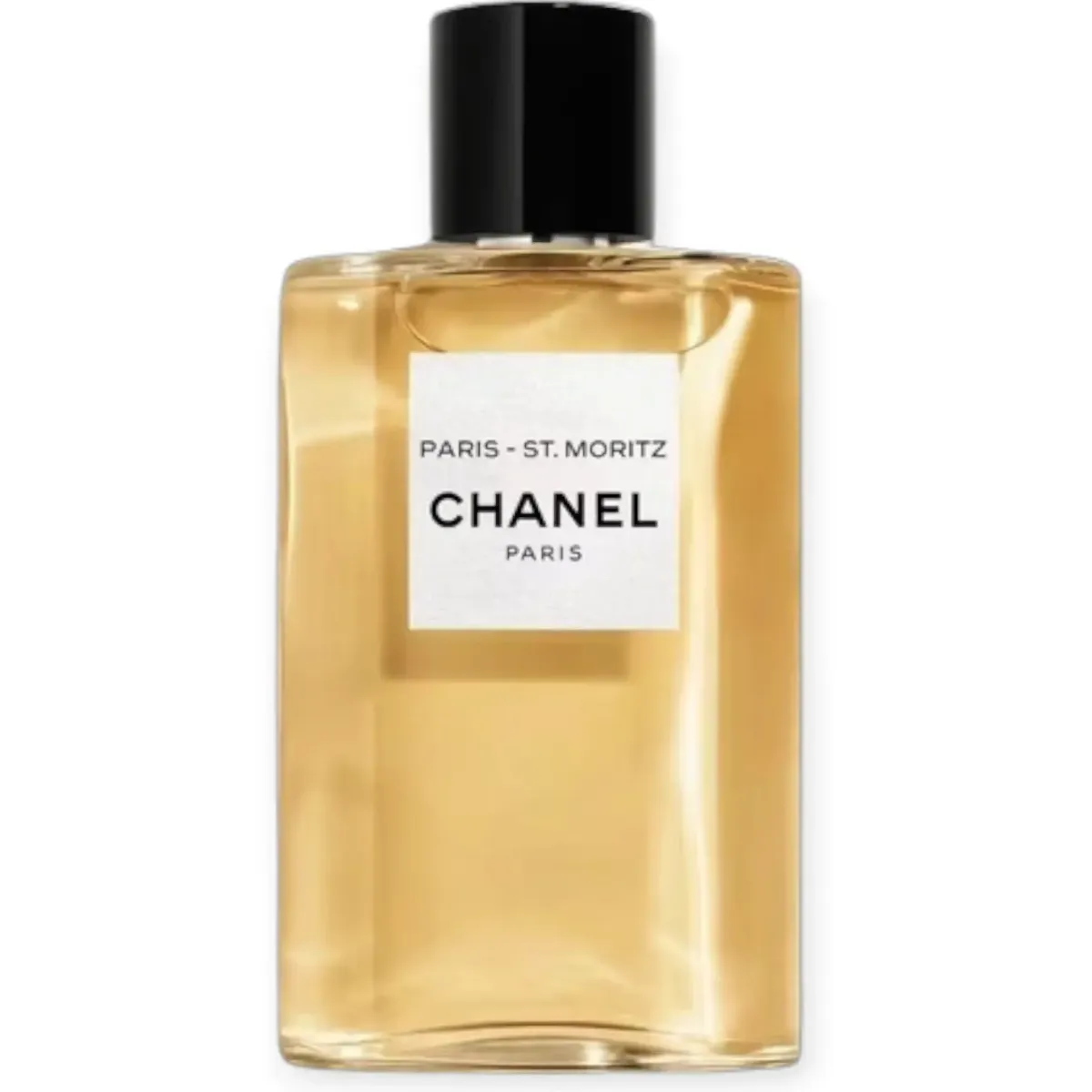
Chanel has taken Les Eaux to the mountains. Paris–St. Moritz is the collection’s first winter-inspired scent, but it does not abandon the easy freshness that makes these Eau de Toilettes distinctive. Olivier Polge builds the new fragrance around a crisp pear accord, a rose facet and musky amber. It is Chanel’s idea of a bright winter day rather than a heavy, fireside perfume.
That contrast is what makes this launch worth a closer look. A fragrance named for a Swiss alpine resort might lead you to expect pine, smoke or dense spice. Chanel’s own description takes a different route: fruit and flower up front, with a warmer musky-amber impression giving the scent its winter setting.
Why St. Moritz?
Les Eaux de Chanel is a travel-minded collection. Each destination offers a different way into the house’s idea of light, wearable fragrance. For Paris–St. Moritz, the connection is personal to Gabrielle Chanel: the house recalls her enjoying Alpine winter sports there from the late 1920s. The perfume translates that setting into something comfortable and polished, while keeping the spontaneous feel Chanel associates with Les Eaux.
Chanel calls this the first winter-inspired Eau in the line and credits in-house perfumer-creator Olivier Polge. “Winter” here is a mood, not a claim about strength. The fragrance is an Eau de Toilette, and its published composition is notably concise.
What are the notes in Paris–St. Moritz?
Chanel highlights three connected facets rather than publishing a detailed top, heart and base pyramid:
| Facet | Chanel’s description |
|---|---|
| Pear | A fresh, fruity pear accord |
| Rose | An elegant floral rose facet |
| Musky amber | Warm notes that contrast with the fruit and flower |
The pear is the most unusual choice for a winter-themed Les Eaux release. It gives the idea of a cold, clear brightness without forcing the perfume into an icy or minty direction. Rose adds a familiar Chanel elegance; musky amber is where the description turns softer and more enveloping. Those are editorial readings of the named facets, not a report from a wear test. Chanel has not published a fuller note pyramid, so there is no reason to invent one.
What makes this a winter Eau de Toilette?
Chanel’s description holds two ideas together: the immediacy of a fresh fruity accord and the comfort of musky-amber notes. That is a more restrained approach to winter than a dense vanilla, leather or incense composition. The house describes Paris–St. Moritz as warm and enveloping while still part of the Les Eaux family, whose appeal lies in its sense of movement and ease.
It is also worth separating the story from a performance promise. “Winter-inspired” does not mean this Eau de Toilette will fill a room in freezing weather, and the word “amber” does not tell us exactly how sweet or deep it will feel on skin. We have not tested it side by side with other Les Eaux releases, so the honest starting point is Chanel’s composition and a recommendation to sample it through the drydown.
Paris–St. Moritz vs. Paris–Paris
If you already know Chanel Paris–Paris, the shared rose gives you a useful point of reference. Chanel describes Paris–Paris through Damask rose, lemon and mandarin, with pink peppercorn and patchouli. It is the sparkling, citrus-rose option. Paris–St. Moritz swaps that citrus-and-pepper framing for pear and a musky-amber contrast.
That does not make St. Moritz a direct replacement or a stronger flanker. It is another destination within the collection. If you love the rose in Paris–Paris but want a fruitier, more softly wrapped idea for cooler days, the new release is the one to try. If lemony sparkle is the whole point for you, keep Paris–Paris on your shortlist as well.
Who should try it?
Start with Paris–St. Moritz if you are curious about pear and rose in a fresh but warmer composition. The musky-amber facet gives the fragrance a softer outline, making it an appealing candidate for someone who enjoys understated cool-weather fragrance. The round, palm-friendly Les Eaux bottle keeps the presentation familiar even as the destination changes.
Sample first if you are looking specifically for a gourmand, a prominent woody note or proven all-day performance. None of those is established by Chanel’s published description. A few hours on your own skin will tell you more than the Eau de Toilette label can about how the pear, rose and amber balance actually wears.
Availability and first take
The Paris–St. Moritz page at Chaos Fragrances is live with its fragrance profile and retailer searches. Those searches are not verified offers for an exact in-stock bottle. Chanel’s official product page lists the fragrance as an Eau de Toilette and shows a 50 ml bottle, with a second size indicated for that market. Confirm the size, concentration and local availability before ordering.
Our first take: the appeal is the tension between winter warmth and Les Eaux freshness. Pear brings the light; rose gives it shape; musky amber adds comfort. Chanel has found a winter setting for the collection without turning it into something unrecognizably heavy.